

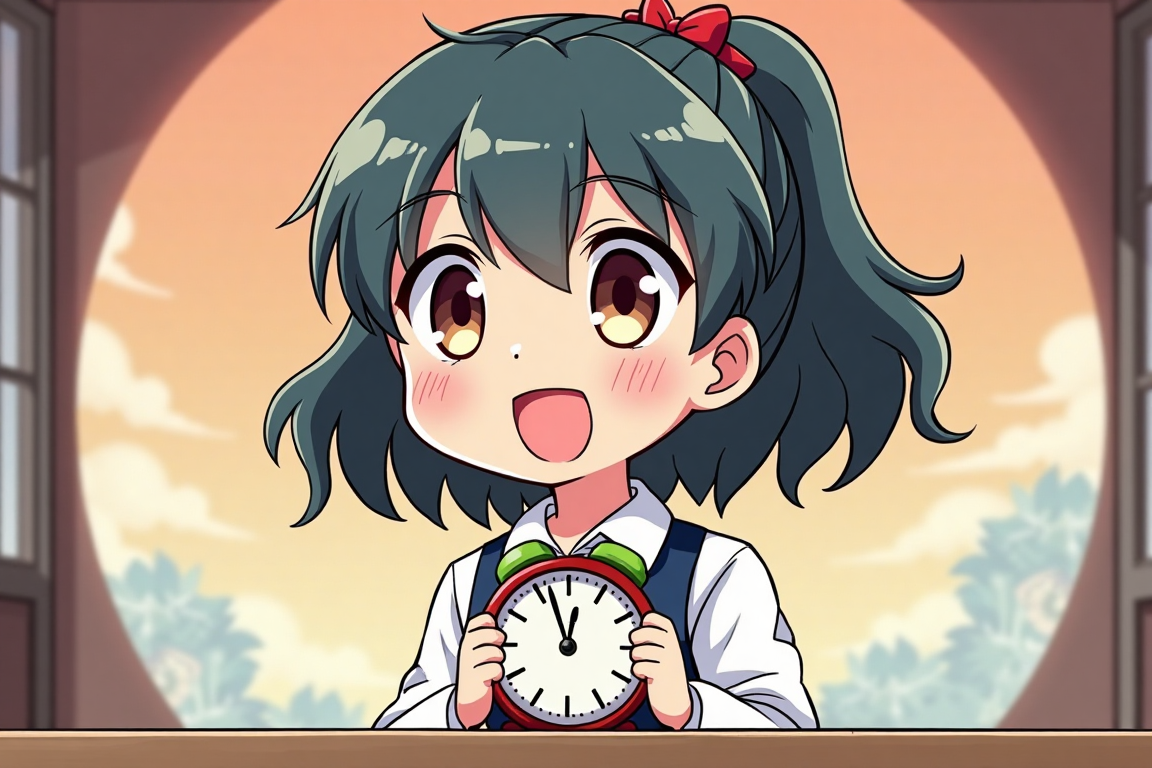
Lost in Translation: How to Tell Date & Time in Japanese Without Losing Your Mind
You know that feeling when you’re traveling in Japan, asking for the time, and suddenly realize you just agreed to meet someone at “banana o’clock”? Yeah, me too. Time and dates in Japanese can be tricky. But don’t worry—I got you covered. Grab your cup of matcha (or, let’s be real, coffee), and let’s break this down before you accidentally schedule your flight for the year 3025.
1. First Things First: How Do You Say “Time” in Japanese?
Let’s start with the basics. The word for time in Japanese is 時間 (じかん / jikan). But before you start throwing it into sentences, know that there are multiple ways to refer to time, depending on whether you’re talking about what time it is or how long something lasts.
- 今何時ですか?(いま なんじ ですか? / Ima nanji desu ka?) → “What time is it now?” (A lifesaver when your phone dies.)
- 時間がない!(じかんがない! / Jikan ga nai!) → “I have no time!” (Also useful when running for the last train.)
Now, if someone asks you what time it is, don’t panic. Just follow this simple formula:
➡ [Hour] + 時 (じ / ji) + [Minutes] + 分 (ふん / fun, or ぷん / pun)
Example:
- 3:15 → 三時十五分 (さんじ じゅうごふん / sanji juu-gofun)
- 7:30 → 七時半 (しちじ はん / shichiji han) (Fun fact: 半 (はん) means “half.” Nice and simple!)
2. AM vs. PM: Avoiding Midnight Mishaps
So, let’s say you’ve mastered reading the time, but you still don’t know if you’re meeting your new Japanese friend for dinner or breakfast at 7 o’clock. That’s where AM and PM come in!
Japanese uses 午前 (ごぜん / gozen) for AM and 午後 (ごご / gogo) for PM:
- 午前7時 (ごぜん しちじ / gozen shichiji) → 7 AM (a totally reasonable time for breakfast.)
- 午後7時 (ごご しちじ / gogo shichiji) → 7 PM (a totally reasonable time for ramen.)
Still confused? Imagine saying “I’ll meet you at 7.”
- If you say just 七時 (しちじ / shichiji), your friend might assume you mean 7 AM (gasp!). So always specify!
3. Telling the Date: Avoiding Accidental Time Travel
Alright, you can now read the time like a pro. But what about dates? You don’t want to book a hotel for August 9th and accidentally show up on September 8th, right? (Yes, that can happen. Trust me.)
Here’s the format for dates in Japan: ➡ [Year]年 (ねん / nen) + [Month]月 (がつ / gatsu) + [Day]日 (にち / nichi)
Example:
- 2025年3月10日 (にせんにじゅうごねん さんがつ とおか) → March 10, 2025
- 1998年7月15日 (せんきゅうひゃくきゅうじゅうはちねん しちがつ じゅうごにち) → July 15, 1998
The Weird Thing About Japanese Days
Months are easy. They just go 一月 (いちがつ / ichigatsu) → January, 二月 (にがつ / nigatsu) → February, etc. But days? Oh boy.
For most days, you just say the number + 日 (にち / nichi), like this:
- 11日 (じゅういちにち / juu-ichi nichi) → 11th
- 25日 (にじゅうごにち / nijuu-go nichi) → 25th
BUT (because of course there’s a “but”), a few days have special readings because… Japanese just loves exceptions.
| Day of the Month | Pronunciation | Meaning |
|---|---|---|
| 1st | ついたち (tsuitachi) | Not “ichi-nichi” 😭 |
| 2nd | ふつか (futsuka) | Sounds cute, though. |
| 3rd | みっか (mikka) | Okay, sure. |
| 4th | よっか (yokka) | Why not? |
| 5th | いつか (itsuka) | Sounds like “someday” in English. |
| 10th | とおか (tooka) | …what happened to “juu”?! |
So if someone says 「ついたち」, they mean the 1st of the month, not something weird about sushi.
4. Days of the Week: The Final Boss
Now, if you thought months and days were bad, wait until you meet the days of the week. These guys have elemental powers.
| English | Japanese | Fun Fact |
|---|---|---|
| Monday | 月曜日 (げつようび / getsuyoubi) | “Moon Day” (lunar energy 🌙) |
| Tuesday | 火曜日 (かようび / kayoubi) | “Fire Day” (spicy 🔥) |
| Wednesday | 水曜日 (すいようび / suiyoubi) | “Water Day” (hydrate, people! 💧) |
| Thursday | 木曜日 (もくようび / mokuyoubi) | “Tree Day” (nature vibes 🌳) |
| Friday | 金曜日 (きんようび / kin’youbi) | “Gold Day” (get rich 💰) |
| Saturday | 土曜日 (どようび / doyoubi) | “Earth Day” (down to earth 🌍) |
| Sunday | 日曜日 (にちようび / nichiyoubi) | “Sun Day” (perfect for napping ☀️) |
5. Bonus: How to Casually Talk About Time & Dates in Japanese
So, you want to sound natural when talking about time? Here are some phrases that’ll make you sound like a seasoned Japan traveler:
- 何時に会う?(なんじに あう?/ Nanji ni au?) → “What time are we meeting?”
- 何曜日?(なんようび?/ Nanyoubi?) → “What day of the week?”
- 今何時?(いま なんじ? / Ima nanji?) → “What time is it now?” (Super casual—use with friends!)
- 昨日 (きのう / kinou) → Yesterday
- 今日 (きょう / kyou) → Today
- 明日 (あした / ashita) → Tomorrow
- 来週 (らいしゅう / raishuu) → Next week
Wrapping Up: You Got This!
Boom! You now know how to tell time, say dates, and avoid confusing 火曜日 (kayoubi / Tuesday) with 火山 (kazan / volcano). (It happens.)
So, next time you’re in Japan, confidently tell someone 「今何時ですか?」, and actually understand their answer. You got this!
Need more Japanese tips? Stick around—I’ve got plenty more where that came from! 😉